
The Golden Hour: Why Timing is Everything in Wedding Photography
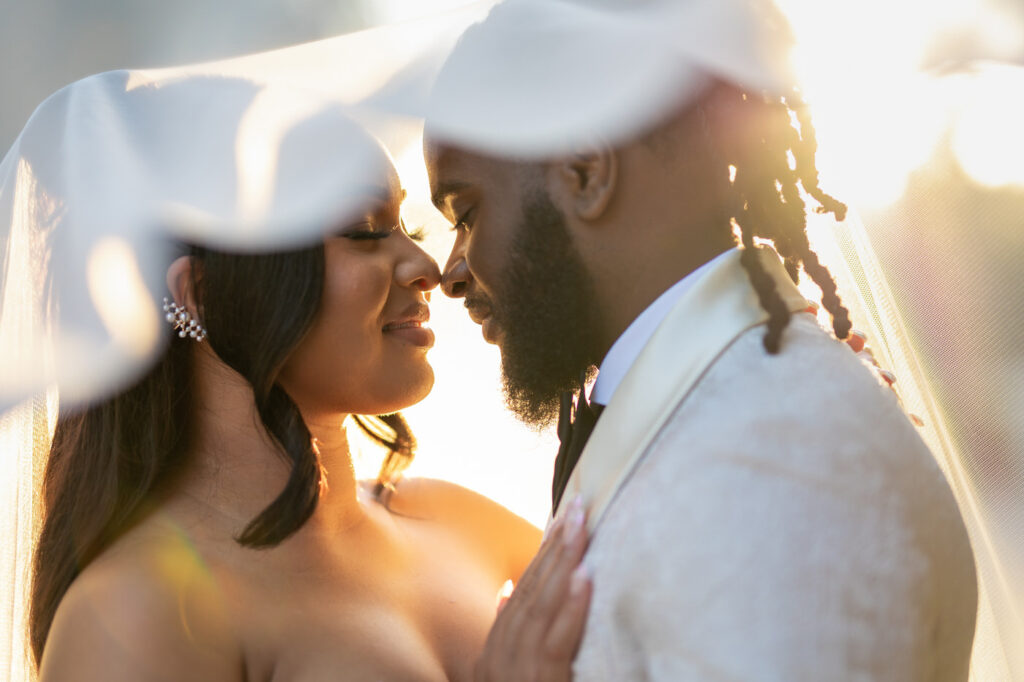
When couples look through our portfolio and fall in love with the glowing, ethereal, and fashion-forward portraits, they often assume the magic lies entirely in the location or post-production. While location and editing are crucial, the true secret ingredient to a cinematic masterpiece cannot be bought or photoshopped. It must be scheduled.
We are talking about the Golden Hour.
As luxury destination wedding cinematographers, we consider this fleeting window of time to be the most important part of your visual timeline. Here is why timing is everything.
1. The Anatomy of Cinematic Light
The golden hour occurs roughly one hour before sunset. During this time, the sun is low on the horizon, traveling through more of the Earth’s atmosphere. This acts as a giant natural diffuser.
Midday sun creates harsh, unflattering shadows under the eyes and forces couples to squint. Golden hour light, however, is soft, warm, and highly directional. It wraps around you, illuminating skin tones flawlessly, creating a natural rim light that separates you from the background, and infusing every frame with a painterly, romantic warmth. It is the ultimate editorial canvas.
2. The Editorial Portrait Session
This beautiful light allows us to fully utilize our signature approach of “guided spontaneity.” Because the light is so inherently flattering, you do not need to hold stiff, rigid poses. We can direct you to walk, interact naturally, and share genuine, quiet moments while the warm Mediterranean or Atlantic light washes over the landscape. This results in high-fashion, effortless imagery that feels profoundly authentic.
3. A Sanctuary from the Celebration
Beyond aesthetics, scheduling a golden hour session serves an essential psychological purpose. A luxury destination wedding is exhilarating but incredibly fast-paced. Your cocktail hour will be filled with enthusiastic greetings, toasts, and social obligations.
Slipping away with us for 20 minutes before sunset is often the first time you will truly be alone as a married couple. It is a moment to breathe, to look at each other away from the crowds, and to ground yourselves in the gravity of the day. The camera simply bears witness to this intimate relief.
4. Engineering Your Timeline
A cinematic visual legacy does not happen by accident; it is engineered. When we partner with you and your wedding planner, we advocate strongly for building your timeline around the sunset.
This might mean starting your ceremony slightly later, or carving out a 20-minute window between the cocktail hour and the dinner reception. If dinner overlaps with sunset, we may politely steal you away between courses. Protecting this window of time is the single greatest investment you can make in your final gallery.
Capturing Your Light
Your wedding photography should be as radiant and enduring as your celebration itself. If you value an editorial approach that prioritizes cinematic light and intentional storytelling, we would be honored to document your legacy.


